Every time a truck was due, I had to be standing in my warehouse to let it in.
That was the moment I realised I'd nearly built myself a job.
I couldn't travel, I couldn't get away, and there wasn't enough work to put someone on full time just to open the door.
It was not something I was planning for.
These days I work somewhere between ten and twenty hours a week on the business, sometimes less.
The way I got there is the same way you get from one level of business freedom to the next.
There are five of them, and most owners get stuck on level two.
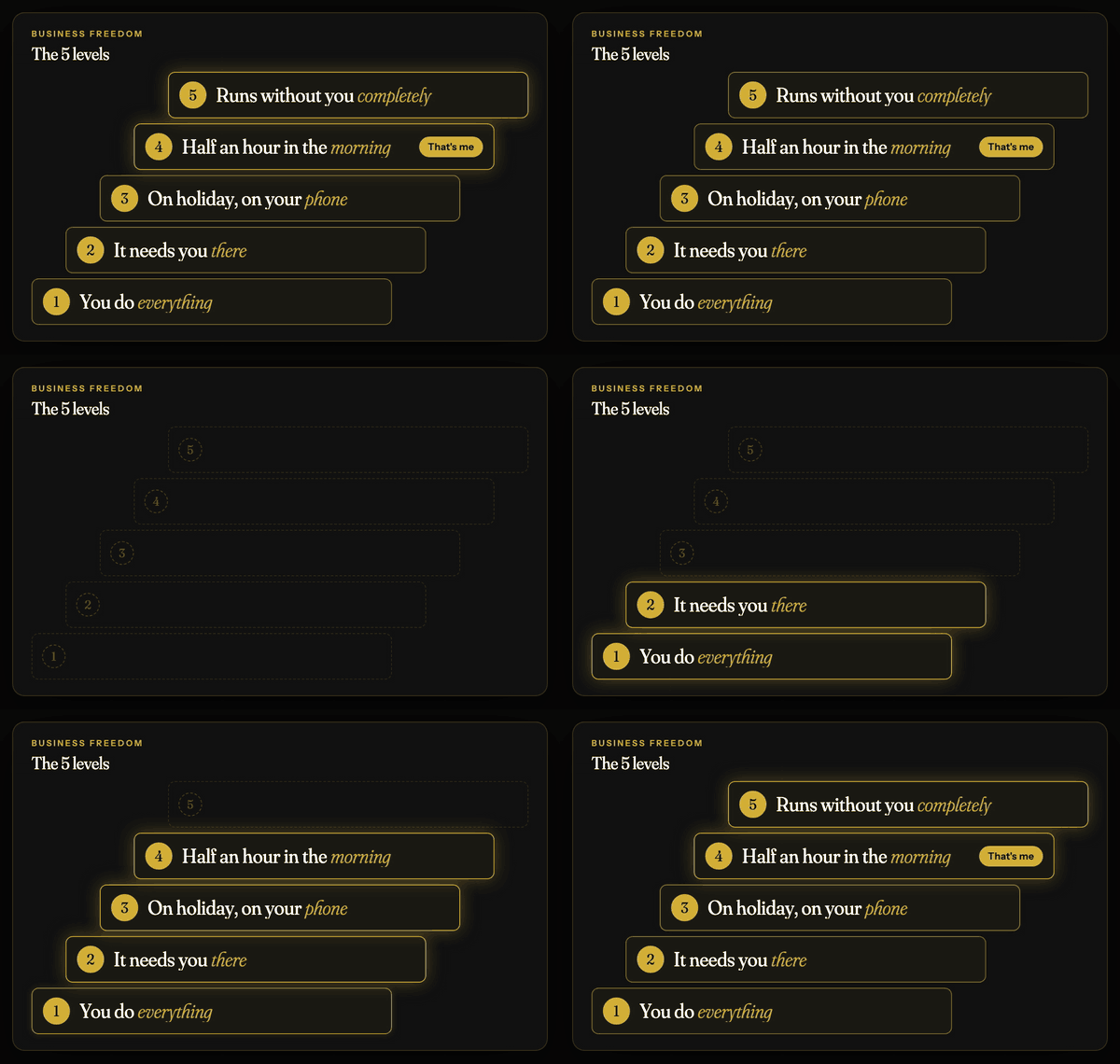
Level 1: You do everything. Every email, every invoice, every quote.
Everyone starts here.
The trap is that your default becomes "I'll just do it myself".
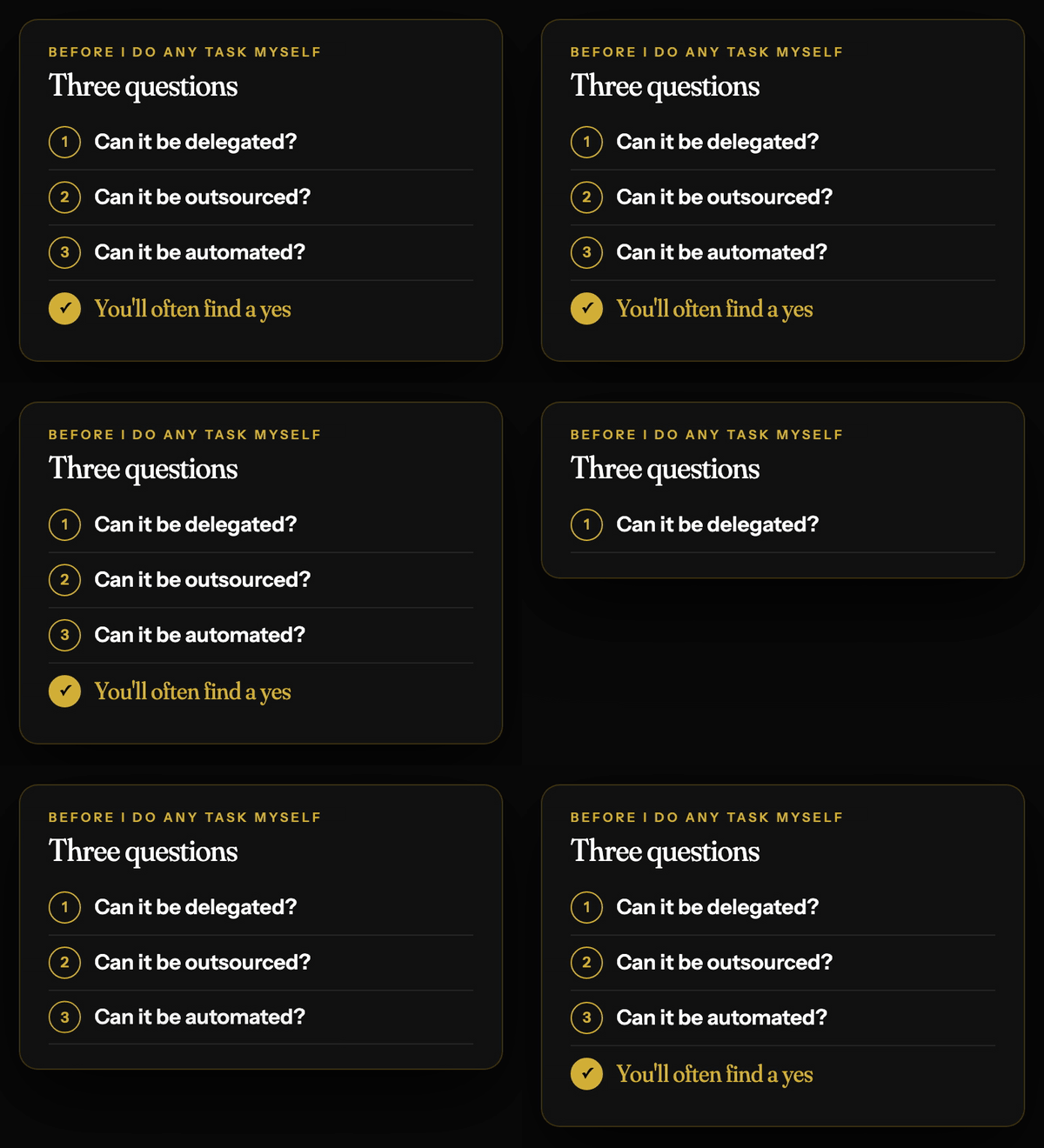
So before you do any task yourself, ask three questions.
Can it be delegated?
Can it be outsourced?
Can it be automated?
You'll often find a yes.
Level 2: The business needs you somewhere. A shed, a shop, an office.
This was my warehouse.
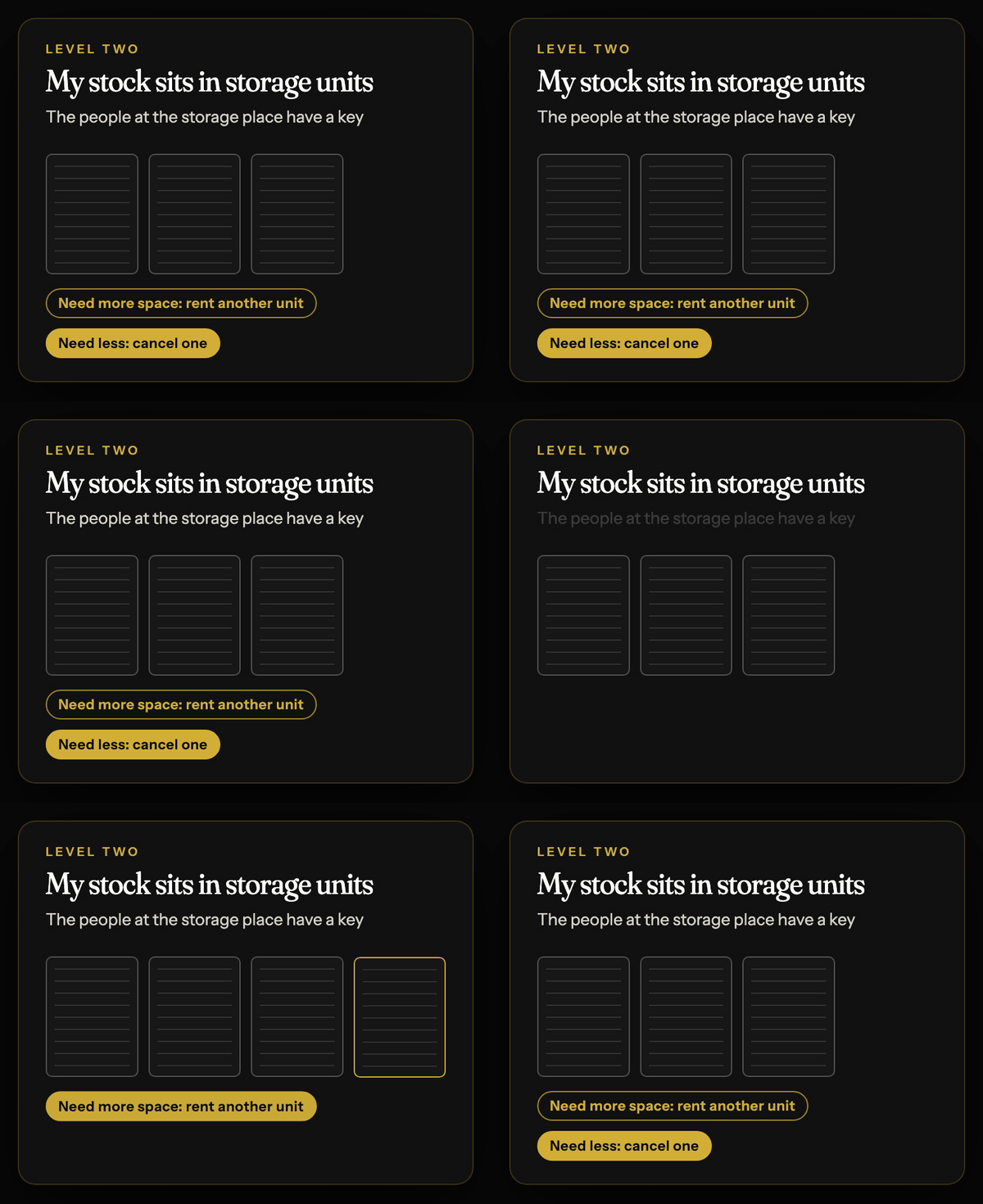
I got rid of it, and my stock sits in storage units now.
The people at the storage place have a key, so when a driver rocks up, they let them in.
When I need more space I rent another unit, and when I need less I cancel one.
If every delivery or customer needs you standing there, that's the first thing to fix.
Level 3: You can go on holiday, but you're on the phone the whole time. A lot of owners who think they've got freedom are sitting right here.
The way out isn't working harder, it's never doing the same job twice.
My emails used to take a couple of hours a day.
Now my AI agent, Grok Bot, drafts every reply, I read them, fix the odd one and hit send, and it's five or ten minutes.
Invoices take seconds.
And the thing that makes all of that easier is writing down how every job is done, step by step, so a new employee, a freelancer or an AI agent can do it without asking you.
Level 4: It only needs you for about half an hour a morning when you're away. That's me, and that's on purpose.
Could I hire someone so I could switch off completely?
Sure.
But I'd rather have that money in my back pocket and spend it on the holiday.
Level 5: It runs without you completely. For most businesses that means a manager on a wage, or a team, and that's a great place to be if it's what you want.
I'm not anti staff.
But for me, right now, four's pretty sweet.
Why stop at four?
Because life's got seasons, and my kids are young.
I know I'm probably leaving money on the table by not working longer and harder.
But once your basic needs are met and there's a bit of a buffer, the return on happiness from more money starts to drop off.
So what are we chasing?
For me it's the mornings before school, taking them to sport, and travelling with them.
When they're older and off with their mates, I reckon the hustle's coming back.
It goes back to working in an office in insurance, looking at the older blokes around me and thinking, I just don't want to be those guys.
So whatever level you're on, build it so it doesn't need you.
Dane
P.S. I'm putting the whole setup, the agent that drafts my emails and does my invoices, step by step into a course called the AI Employee Blueprint.
| Get first look → |